More than half of the world uses social media. That’s 5.07 billion people who spend an average of 2 hours and 20 minutes per day on various social media platforms. Let’s break that down further:
140 min/day
980 min/wk = 16 hrs
51,100 min/yr = 852hrs = 35.5 days/year
The average lifespan is 72 years. Let’s say a kid gets a phone at 13 years of age.
59yrs x 35.5 days = 2,094.6 days = 5.7 years of life spent on social media.

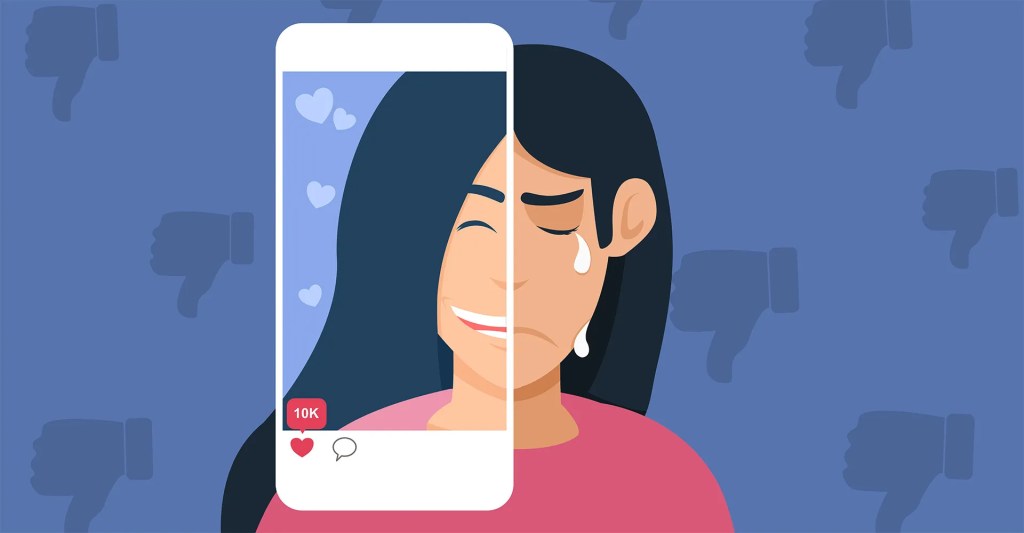
Several studies have highlighted the potential negative impacts of social media on mental health. These include body image dissatisfaction [1], increased risk of addiction and cyberbullying [2], phubbing behaviors [3], and negative mood. Excessive social media use has been linked to loneliness, fear of missing out, decreased well-being, and lower life satisfaction [3, 4]. Individuals prone to social media addiction often experience depressive symptoms and low self-esteem [5].
Its necessary to point out that social media isn’t all bad as it can enhance connection and a sense of belonging. However, its potential to negatively impact ones mental health (especially among youth) is so profound that we’re starting to see countries, like Australia, attempting to ban social media for those under 16.
How has social media affected your mental health? Do you think social media banning is a good idea, and will it be effective? Share your thoughts in the comment section.
References:
1. Harriger JA, Thompson JK, Tiggemann M. TikTok, TikTok, the time is now: future directions in social media and body image. Body Image. 2023;44:222–6. https://doi.org/10.1016/j.bodyim.2021.12.005.
2. Naslund JA, Bondre A, Torous J, Aschbrenner KA. Social media and mental health: benefits, risks, and opportunities for research and practice. J Technol Behav Sci. 2020;5:245–57. https://doi.org/10.1007/s41347-020-00094-8.
3. Chi LC, Tang TC, Tang E. The phubbing phenomenon: a cross-sectional study on the relationships among social media addiction, fear of missing out, personality traits, and phubbing behavior. Curr Psychol. 2022;41(2):1112–23. https://doi.org/10.1007/s12144-022-0135-4.
4. Valkenburg PM. Social media use and well-being: what we know and what we need to know. Curr Opin Psychol. 2022;45:101294. https://doi.org/10.1016/j.copsyc.2020.101294.
5. Bányai F, Zsila Á, Király O, Maraz A, Elekes Z, Griffiths MD, Urbán R, Farkas J, Rigó P Jr, Demetrovics Z. Problematic social media use: results from a large-scale nationally representative adolescent sample. PLoS ONE. 2017;12(1):e0169839. https://doi.org/10.1371/journal.pone.0169839.

 Shape180
Leave a comment